
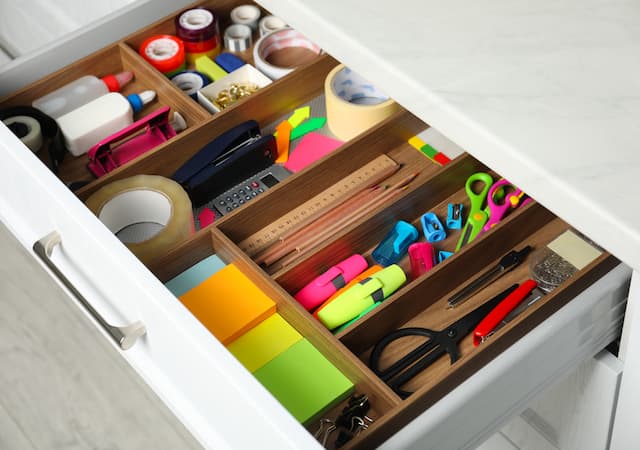
Let's face it, we all have that one drawer. You know, the one where pens go to die, spare keys multiply like rabbits, and random bits of who-knows-what gather dust. It’s the infamous "junk drawer," a chaotic abyss that mocks our attempts at organization. But what if I told you that you could conquer this household menace in just 20 minutes?
That drawer, crammed with orphaned items, becomes a black hole for lost time and frustration. Searching for a simple battery turns into an archaeological dig, and finding that crucial spare button feels like winning the lottery. The sheer visual clutter can add to your mental load, contributing to stress and a feeling of being overwhelmed by your own home.
This blog post is your guide to a quick and effective junk drawer intervention. We'll break down the process into manageable steps, providing you with practical tips and strategies to transform your drawer from a chaotic mess into an organized oasis. Forget spending hours sorting and purging – we're aiming for a fast and impactful refresh.
By following our simple steps, you can declutter, organize, and reclaim your junk drawer in under half an hour. This involves quick sorting, ruthless discarding, and strategic placement of essential items. Say goodbye to the chaos and hello to a functional and stress-free space! Keywords: Junk drawer organization, decluttering tips, quick organizing, home organization, 20-minute organizing.
The "Before" Photo: Facing the Monster
Before we even touch the drawer, let's take a moment to acknowledge the before.I remember when I finally decided to tackle my own junk drawer. It was overflowing, a visual testament to my procrastination. There were old receipts from stores I didn't even remember visiting, tangled charging cables for devices long gone, and an alarming number of rubber bands – none of which seemed to fit anything. The act of even opening the drawer felt like a commitment to a mini-excavation. It was a source of constant low-level stress. Every time I needed something from the kitchen, I’d have to sift through that disaster zone, hoping to emerge victorious with the correct item. Often, I'd just give up and buy a new one, contributing to the problem. Finally, I reached my breaking point. The sheer amount of useless stuff crammed into that space was starting to affect my mood. I knew something had to change. So, armed with a trash bag and a healthy dose of determination, I embarked on my 20-minute junk drawer challenge. Facing that “before” photo is crucial. It’s a visual reminder of why you’re doing this. Take a picture of your own junk drawer before you start. It will serve as motivation and give you a sense of accomplishment when you compare it to the after.This is not just about organizing a drawer; it's about taking control of your space and reducing unnecessary stress in your life. Remember, the goal is to create a functional and organized space that makes your daily life easier, not harder.
The 20-Minute Takedown: Your Action Plan
The secret to conquering the junk drawer in just 20 minutes is a strategic approach and ruthless efficiency. No dilly-dallying! First, set a timer. This will keep you focused and prevent you from getting sidetracked. Next, grab three containers: one for trash, one for items to donate or relocate, and one for items that actually belong in the junk drawer. The key is to avoid overthinking. Pick up each item, make a quick decision, and place it in the appropriate container. Don't get bogged down in sentimentality. If you haven't used it in the past year, chances are you don't need it. Be honest with yourself. Once you've sorted through everything, immediately dispose of the trash and relocate the items you're donating or relocating. This prevents the sorted items from migrating back into the drawer. Now, assess the remaining items. Are there any duplicates? Can you consolidate anything? Use drawer dividers or small containers to create designated zones for different types of items, such as office supplies, batteries, and tools. This will help keep everything organized and prevent it from devolving into chaos again. Remember, the goal is not perfection, but progress. Even a partially organized junk drawer is better than a completely chaotic one. The most important thing is to start and maintain momentum. Set aside a few minutes each week to tidy up the drawer and prevent it from becoming a dumping ground again. With a little effort, you can keep your junk drawer under control and enjoy a more organized and stress-free home.
The History & Mythology of the Junk Drawer
The "junk drawer" isn't just a modern phenomenon; it's practically an archetype of modern living. Its origins can be traced back to the very beginnings of domestic organization (or lack thereof). As soon as humans started accumulating "stuff," the need for a convenient, catch-all space arose. Historically, this space might have been a chest, a cupboard, or even a specific corner of a room. The mythology surrounding the junk drawer is rich with tales of hidden treasures, forgotten necessities, and the ever-elusive item that isalwaysneeded just moments after it's been thrown away. It’s a place where lost objects go on to be reborn into the arms of their owners. The junk drawer, you see, is not always bad. In some cultures, it's even seen as a symbol of abundance and preparedness. It represents the idea that you have everything you might possibly need, readily available, even if it's buried under a pile of random objects. Of course, the modern junk drawer has evolved into something of a beast. With the proliferation of disposable items, single-use tools, and countless gadgets, the junk drawer has become a repository for the detritus of our consumer culture. But even in its modern, chaotic form, the junk drawer still holds a certain appeal. It's a reminder of our lives, our habits, and our ever-growing collection of stuff. Taming the junk drawer is not about eliminating it entirely. It's about creating a system that allows you to manage your possessions and find what you need when you need it, without getting lost in the chaos.
The Hidden Secrets of a Tamed Drawer
The hidden secret to a truly tamed junk drawer lies not just in the initial purge and organization, but in establishing sustainable habits. It's about understanding thewhybehind the chaos and addressing the root causes. For many, the junk drawer is a symptom of poor decision-making and a lack of designated storage spaces. Items end up in the junk drawer simply because there's no other place to put them. So, the first secret is to create a home for everything. If an item doesn't have a designated spot, it's likely to end up in the junk drawer. Take the time to identify appropriate storage solutions for common items that tend to migrate into the drawer. Another secret is to practice the "one in, one out" rule. For every new item you bring into your home, get rid of something similar. This prevents clutter from accumulating in the first place. The third secret is to regularly declutter. Set aside a few minutes each week or month to tidy up the junk drawer and remove any unwanted items. This prevents it from becoming overwhelming again. Beyond the practical tips, there's a deeper, more psychological secret to taming the junk drawer. It's about changing your relationship with your possessions. It's about recognizing that owning more stuff doesn't necessarily make you happier, and that clutter can actually contribute to stress and anxiety. By embracing a minimalist mindset and focusing on quality over quantity, you can break free from the cycle of accumulation and create a more peaceful and organized home.
Recommendations for a Long-Lasting Solution
To ensure your junk drawer stays tamed, I highly recommend investing in a few key organizational tools. Drawer dividers are a lifesaver, creating designated zones for different types of items. Consider adjustable dividers that can be customized to fit your specific needs. Small containers, such as clear plastic bins or repurposed jars, are also essential for corralling loose items like paperclips, rubber bands, and batteries. Another recommendation is to label everything. Use a label maker or even just a permanent marker to clearly identify the contents of each container. This will make it much easier to find what you need and prevent items from getting mixed up. I'd also suggest regularly reviewing and purging the contents of your junk drawer. Set a reminder on your calendar to do a quick tidy-up every month or so. This will prevent clutter from accumulating and keep your drawer organized. In addition to these practical tools, I recommend adopting a few mindset shifts. First, be mindful of what you're bringing into your home. Before you buy something new, ask yourself if you really need it and where you're going to store it. Second, practice the "one in, one out" rule. For every new item you bring in, get rid of something similar. Finally, embrace the idea of minimalism. Focus on owning fewer, higher-quality items that you truly love and use. By combining the right tools with the right mindset, you can create a junk drawer that is not only organized but also functional and stress-free.
Deep Dive: The Psychology of Clutter
The seemingly simple act of decluttering a junk drawer has surprising psychological benefits. Clutter, in general, can contribute to feelings of stress, anxiety, and overwhelm. It can make it difficult to focus, sap your energy, and even affect your mood. When your environment is chaotic, your mind tends to feel chaotic as well. Conversely, an organized and clutter-free space can promote feelings of calm, control, and well-being. When you declutter, you're not just tidying up your physical space; you're also clearing your mental space. By removing unwanted items, you're freeing yourself from the emotional baggage associated with those items. You're creating space for new opportunities and experiences. The act of decluttering can also be empowering. It gives you a sense of control over your environment and your life. It's a tangible way to take action and make positive changes. Studies have shown that decluttering can actually reduce stress hormones like cortisol and improve your overall mood. It's a small change that can have a big impact on your mental and emotional health. Beyond the individual benefits, decluttering can also improve your relationships. Clutter can be a source of conflict in families and households. By decluttering together, you can create a more harmonious and peaceful living environment. So, the next time you're feeling stressed or overwhelmed, consider tackling that junk drawer. It might just be the first step towards a more organized, peaceful, and fulfilling life. The psychological benefits of decluttering are real and significant. Don't underestimate the power of a clean and organized space to improve your overall well-being.
Tips and Tricks for Maintaining Order
Maintaining order in your newly tamed junk drawer is just as important as the initial decluttering process. Here are some tips and tricks to keep your drawer organized and prevent it from reverting to its chaotic state. First, make it a habit to put things back where they belong immediately after using them. This may seem obvious, but it's often the simple things that make the biggest difference. Second, designate a specific time each week or month to tidy up the drawer. Even just a few minutes of maintenance can prevent clutter from accumulating. Third, be mindful of what you're bringing into your home. Avoid impulse purchases and only buy things you truly need. Fourth, practice the "one in, one out" rule. For every new item you bring in, get rid of something similar. Fifth, regularly review the contents of your junk drawer and remove any unwanted items. Be honest with yourself about what you actually use and what's just taking up space. Sixth, consider using a labeling system to clearly identify the contents of each container or divider. This will make it easier to find what you need and prevent items from getting mixed up. Seventh, don't be afraid to get creative with your storage solutions. Repurpose old containers, jars, and boxes to create custom organizers. Eighth, involve your family members in the maintenance process. Make it a shared responsibility to keep the junk drawer organized. Ninth, remember that perfection is not the goal. Don't get discouraged if your junk drawer isn't perfectly organized all the time. The key is to make progress and maintain a system that works for you. Finally, celebrate your success! Acknowledge the effort you've put into organizing your junk drawer and enjoy the benefits of a clutter-free space.
Advanced Organization Techniques
Once you've mastered the basics of junk drawer organization, you can explore some advanced techniques to take your organization to the next level. One technique is to use a pegboard system to hang small tools, keys, and other items on the back of the drawer. This maximizes vertical space and keeps everything within easy reach. Another technique is to create a custom insert for your drawer using foam or cardboard. This allows you to create perfectly sized compartments for different types of items. You can also use a 3D printer to create custom organizers tailored to your specific needs. Consider color-coding your items to make it easier to find what you're looking for. For example, you could use different colored containers or labels for different categories of items. Another advanced technique is to digitize your documents. Scan important papers and store them electronically to reduce paper clutter in your junk drawer. You can also use a password manager to store your passwords securely online, eliminating the need for sticky notes and scraps of paper. If you have a lot of small electronics, consider using a charging station to keep them organized and prevent tangled cords. You can also use a cable organizer to keep your cords neatly bundled and labeled. For items that you don't use frequently, consider storing them in a separate container in a less accessible location. This frees up space in your junk drawer for items you use more often. Finally, don't be afraid to experiment with different organization techniques to find what works best for you. The key is to be creative and find solutions that fit your specific needs and lifestyle. Remember, the goal is to create a junk drawer that is not only organized but also functional and efficient.
Fun Facts About Junk Drawers
Did you know that the term "junk drawer" is believed to have originated in the mid-20th century? As homes became more cluttered with mass-produced goods, the need for a catch-all drawer became increasingly apparent. Another fun fact is that studies have shown that the average junk drawer contains about 20% items that are completely useless. These items are often forgotten or broken and serve no practical purpose. Interestingly, the contents of a junk drawer can actually reveal a lot about your personality and habits. A cluttered junk drawer may indicate a tendency towards procrastination or disorganization, while an organized junk drawer may suggest a more detail-oriented and meticulous personality. Many people believe that the items in their junk drawer have sentimental value, even if they don't actually use them. This can make it difficult to declutter and let go of unwanted items. In some cultures, the junk drawer is seen as a symbol of abundance and preparedness. It represents the idea that you have everything you might possibly need, readily available, even if it's buried under a pile of random objects. The junk drawer is also a common source of frustration and conflict in households. Arguments often arise over whose responsibility it is to clean it out and what items should be kept or discarded. Despite its negative connotations, the junk drawer can also be a source of creativity and inspiration. Many artists and inventors have found inspiration in the random objects and materials found in their junk drawers. Finally, the junk drawer is a universal experience. No matter where you live or what your background, chances are you have a junk drawer in your home.
How to Start the "Tame the Junk Drawer" Process
Ready to embark on your junk drawer taming journey? Here's a step-by-step guide to get you started: First, gather your supplies. You'll need a trash bag, a donation box, drawer dividers or containers, a cleaning cloth, and a timer. Second, clear the area around your junk drawer. This will give you plenty of space to work and prevent items from getting lost or misplaced. Third, set a timer for 20 minutes. This will help you stay focused and prevent you from getting sidetracked. Fourth, empty the entire contents of your junk drawer onto a flat surface. This will allow you to see everything you have and make it easier to sort. Fifth, start sorting. Divide your items into three categories: trash, donations, and keep. Be honest with yourself about what you actually use and what's just taking up space. Sixth, discard the trash and pack up the donations. Remove these items from the area immediately to prevent them from migrating back into the drawer. Seventh, clean the inside of your junk drawer. Wipe down the surfaces with a cleaning cloth to remove any dust or debris. Eighth, organize the remaining items using drawer dividers or containers. Create designated zones for different types of items, such as office supplies, batteries, and tools. Ninth, put everything back in the drawer in an organized manner. Make sure everything has a designated spot and is easily accessible. Tenth, take a "before" and "after" photo of your junk drawer. This will give you a sense of accomplishment and motivate you to keep it organized. Finally, celebrate your success! Acknowledge the effort you've put into taming your junk drawer and enjoy the benefits of a clutter-free space. Remember, the goal is not perfection, but progress. Even a partially organized junk drawer is better than a completely chaotic one.
What If... The Junk Drawer Fights Back?
Okay, let's be real. Sometimes, despite our best efforts, the junk drawer seems to have a life of its own. It's like a hydra – you cut off one head (a pile of tangled cords), and two more grow back in its place (random screws and orphaned buttons). So, what do you do when the junk drawer fights back? First, don't get discouraged. It's a common experience. The key is to be persistent and adapt your strategies. If you find that certain types of items keep accumulating in the junk drawer, try to identify the root cause. Is there a lack of designated storage space for those items? Are you simply too lazy to put them away properly? Once you've identified the problem, you can come up with a solution. For example, if you find that you're always throwing loose change into the junk drawer, consider getting a small coin jar or piggy bank to keep on your counter. If you're struggling to let go of sentimental items, try creating a "memory box" to store those items in a less cluttered location. You can also take photos of the items and create a digital scrapbook. If you're having trouble staying motivated, enlist the help of a friend or family member. Ask them to hold you accountable and provide support. You can also reward yourself for reaching your decluttering goals. For example, treat yourself to a nice dinner or a new book after you've successfully tamed your junk drawer. Remember, taming the junk drawer is an ongoing process, not a one-time event. It's okay to slip up occasionally. The important thing is to keep making progress and not let the clutter overwhelm you. If all else fails, consider hiring a professional organizer. They can provide expert guidance and help you create a sustainable organization system.
Listicle: 10 Things You Always Find in a Junk Drawer
Let's face it, there are certain items that are almost guaranteed to be lurking in every junk drawer. Here's a listicle of 10 things you always find:
- Dead Batteries: The graveyard for all those AA, AAA, C, and D batteries, whose life force was once useful.
- Tangled Cords: Phone chargers from phones long gone, tangled beyond recognition. It's like an electronic Medusa's head in there.
- Mystery Keys: Keys to what? Who knows! They could unlock a forgotten treasure, or maybe just an old bike lock.
- Random Screws and Nails: Where did they come from? What do they belong to? The world may never know.
- Rubber Bands: An alarming amount of rubber bands, many of which are stretched out and useless.
- Paperclips: Bent, broken, and scattered throughout the drawer like tiny metal confetti.
- Pens That Don't Work: You keep them, hoping they'll magically start working again, but they never do.
- Old Receipts: Faded and illegible receipts from purchases you can't even remember making.
- Takeout Menus: For restaurants you haven't ordered from in years, but you might... someday.
- Instruction Manuals: For appliances you no longer own, or for which you've already figured out how to use. The interesting thing about a junk drawer is that it's like a time capsule. It's a snapshot of your past purchases, your forgotten projects, and your disorganized habits. While it can be a source of frustration, it can also be a source of amusement. It's a reminder that we're all human, and we all have a little bit of clutter in our lives. So, the next time you open your junk drawer, take a moment to appreciate its unique charm. It's a part of your home, and it's a part of you.
Question and Answer
Here are some frequently asked questions about taming the junk drawer:
Q: What if I don't have 20 minutes?
A: Break it down into smaller chunks. Even 5-10 minutes a day can make a difference. Focus on one category of items at a time, such as office supplies or batteries.
Q: What if I'm not sure what to keep?
A: Ask yourself if you've used the item in the past year. If not, chances are you don't need it. Be honest with yourself. You can also try the "Kon Mari" method, which involves asking yourself if the item sparks joy. If it doesn't, let it go.
Q: What if my junk drawer is really, really bad?
A: Don't be overwhelmed. Start with the most obvious items that you know you can discard. Focus on making small progress, and don't try to do everything at once. You can also enlist the help of a friend or family member to make the process less daunting.
Q: How do I prevent my junk drawer from becoming cluttered again?
A: Establish sustainable habits, such as putting things back where they belong immediately after using them, designating a specific time each week or month to tidy up the drawer, and being mindful of what you're bringing into your home.
Conclusion of How to Tame the "Junk Drawer" in 20 Minutes
So, there you have it! Taming the junk drawer in 20 minutes is entirely possible with a strategic approach and a commitment to decluttering. By following the steps outlined in this post, you can transform your chaotic drawer into an organized and functional space. Remember to be ruthless with your discarding, create designated zones for different types of items, and establish sustainable habits to prevent clutter from accumulating again. The benefits of a tamed junk drawer extend beyond just the physical space. It can reduce stress, improve your mood, and give you a sense of control over your home and your life. So, what are you waiting for? Set a timer, gather your supplies, and get ready to conquer that junk drawer! You'll be amazed at how much of a difference it can make.